
Feb 27 • Sean Overin
$23 for 23 Years — A System Built to Fail the People It’s Meant to Serve
Empty space, drag to resize
Hey folks,
We’re zooming in on BC’s MSP reimbursement problem—a system meant to support those most in need, but often ends up blocking their access to care.
We’re zooming in on BC’s MSP reimbursement problem—a system meant to support those most in need, but often ends up blocking their access to care.
On June 6, PABC will present to the Select Standing Committee on Finance. I’ve been helping shape the talking points for the 5-minute slot our CEO will have. It’s a rare chance to speak directly to the people who shape the provincial budget.
This comes as BC invests $155M to recruit and retain allied health professionals, and $24.9M to expand UBC’s physio program. Great moves—but without better access for patients, especially those on premium assistance, we risk training a workforce people still can’t afford to see.
This is about aligning intentions with action. And it matters.

The Karran et al. 2020 systematic review pooled data from 17 studies, covering over 2.1 million people, to understand how socioeconomic position (SEP) influences recovery from non-specific low back pain (LBP). The results are staggering—and deeply relevant to our MSP system.
Here’s what they found:
- 💸 Income matters—big time. People in lower-income brackets were up to 1.8 times more likely to experience ongoing disability from low back pain compared to higher-income peers. That’s an 80% higher risk of staying in pain and missing work simply because of economic position.
- 🔧 Job type isn’t just a lifestyle detail—it’s a risk factor. People with manual or physically demanding jobs had consistently worse outcomes, including longer recovery times and more persistent disability.
- 🎓 Education level plays a huge role. Those with less formal education were significantly more likely to suffer long-term consequences of back pain. And this held true even after controlling for pain intensity and physical function at baseline.
- 🧠 Psychosocial stressors and limited resources compound the risk. Low SEP isn’t just about money—it reflects daily instability, higher stress loads, less flexibility at work, and reduced access to healthcare and social supports.
What this means for MSP:
BC’s current reimbursement model covers just $23 per session for up to 10 visits, and only for those earning under $42,000. But this exact group is statistically the most vulnerable to long-term pain and disability. According to Karran et al., denying them early and adequate care isn’t just unfortunate—it’s actively contributing to chronicity and inequality.
The MSP position statement puts it well:
“While MSP technically offers coverage, it is functionally inaccessible to many British Columbians.”
Especially the ones who need it most.

Let’s get clear:
The biggest predictor of who stays in pain isn’t the injury—it’s the psychosocial stuff, and in today's study, we're looking at the life they go home to.
Empty space, drag to resize
📉 1. It’s not just clinical care—it’s the conditions of care.
Karran et al. (2020) show that lower income, education, and physically demanding jobs all increase the risk of long-term disability from back pain.
If you’re poor or overworked, you’re more likely to stay in pain.
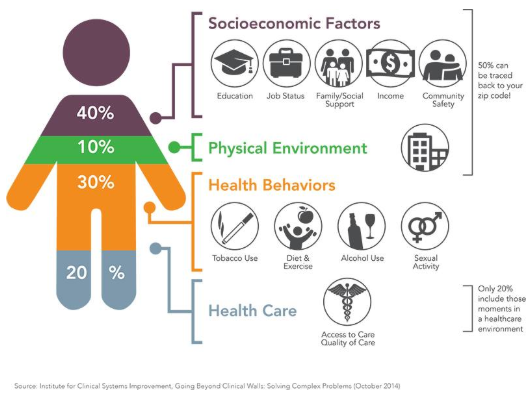
This paper from Anne Andermann pushes us further:
Don’t just screen for social risk—act on it.
🔍 Ask: “Is cost ever a barrier to care for you?”
🧭 Map: low-cost services in your community.
🤝 Advocate: call, refer, follow up. Sometimes healthcare is navigation.
“Healthcare providers cannot ignore the social realities in which their patients live.”
Empty space, drag to resize
🔁 2. MSP isn’t working for the people who need it most.
The MSP paper outlines a structural mismatch:
Low-income patients qualify—but can’t afford the $70+ co-pay.
And of course, clinics can’t absorb the loss from $23 reimbursements.
That’s not access. That’s a trap.
Empty space, drag to resize
🩹 3. What do we do?
As clinicians:
- Bring social risk into your assessments
- Develop simple scripts and community resource sheets
- Push for creative solutions with your professional associations
As advocates:
- Use this evidence—Karran, Andermann, etc
- Ask for what works: raise the rate to at least $60 for a short-term fix
- Remind policymakers: early rehab = prevention
This isn’t about charity—it’s about making the system do what it was designed to do.
We know who’s at risk. We know what works. Now we need to fund it.

Picture this:
Your dad’s just been diagnosed with Parkinson’s. He’s already had one fall. His doctor recommends physio to help with balance and mobility.
He qualifies for MSP—great in theory. But it only covers $23, and the co-pay is $70 per session. He likely needs 4–6 visits just to get started.
He can’t afford it. So he waits. Then falls again. The exact scenario the system was designed to prevent becomes inevitable—because it’s financially out of reach.
This isn’t rare. It’s what Karran et al. found: people with lower income face significantly worse outcomes—not because care doesn’t work, but because they can’t get it early.
We highlight this in the MSP Statement:
“This is a program built for those in need—yet it’s functionally inaccessible to them.”
We’re not seeing a lack of effort. We’re seeing a failure of access.

Lately I’ve been reworking how I write, teach, and even pitch stuff—thanks to a book a friend nudged me toward: Made to Stick. (You know who you are. Appreciate you.)
The book breaks down why some ideas land while others vanish. The punchline? Sticky ideas follow six principles—SUCCES:
Simple. Unexpected. Concrete. Credible. Emotional. Story.
Now I find myself asking these six questions before I speak or hit send:
- Is it simple? What’s the core idea I want them to walk away with? (e.g., “$23 for 23 years.”)
- Is it unexpected? Does it break their assumptions? (e.g., “Public healthcare that the public can’t access.”)
- Is it concrete? Will they see it? Feel it? (e.g., “$23 covers a sandwich and a coffee. Not your recovery.”)
- Is it credible? Can I back it up with real numbers or a trusted source? (e.g., “2.1 million people. 60–80% higher disability rates.”)
- Is it emotional? Why should they care? (e.g., “Sara missed three weeks of work because she couldn’t afford care.”)
- Is there a story? Can I say it in a way that makes someone lean in instead of tuning out?
This framework has been added to my approach—from team updates, meetings, presentations and of course, writing the Friday 5. I’m still learning, but I can already tell it’s helping me cut the noise and hit the mark better.
Give the book a read if you haven’t. It’s deceptively simple—and incredibly sticky.

🧠 “This is not a request for expansion—it’s a request for access to what already exists.”
- That line lands because it’s true.
- The clinics are here. The clinicians are ready. The patients qualify.
- The only thing missing is a rate that makes care possible.
📉 The MSP rate—$23 per visit—hasn’t changed in 23 years!
- It now covers less than 30% of a typical physio session.
- Patients on premium assistance face co-pays of $60–$95 per visit. Many simply walk away.
💡 The ask? Raise the rate to $60 per visit.
- No system overhaul. Just make the care that already exists actually accessible.
- It’s not radical. It’s repair.
- Is this final solution? Not even close, there are a few other asks to come.
Empty space, drag to resize
Final takeaway:
We want to help everyone, not just some. We can’t treat what people can’t access. Pain lasts longer when systems delay care.
Raising the MSP rate isn’t radical—it’s how we make care real.
The superpower? Timely support, human connection, and funding that meets people where they’re at.
Until next time:
Keep the coffee strong, the data sharp, and your voice in the conversation.
Stay nerdy,
Sean Overin, PT
Subscribe to our newsletter
Every Friday we cover must read studies, how they fit in practice, give it real world context, provide top resources and one sticky idea.
Thank you!
You have successfully joined our Friday 5 Newsletter subscriber list.