Empty space, drag to resize
This week, we’re digging into a narrative review meets clinical reflection—and it’s a must-read for anyone working in sensitive spaces like pelvic health, pain, or trauma recovery.
It’s a thoughtful synthesis of clinical wisdom, neurobiological insight, and trauma theory—woven together with a case example that feels all-too-familiar to those of us in the clinic.
The intention?
To guide pelvic health providers—and really, any rehab clinician—toward safer, more responsive care for individuals with a history of sexual trauma.
The authors draw from interdisciplinary expertise (physio, psychology, law, trauma research) to offer practical strategies for working with the body when it holds the story of harm.

Clinical presentations like pelvic pain, vaginismus, or incontinence aren’t just about tissue.
They can be echoes of trauma stored in the body.
What happens when a routine exam (pelvic health or otherwise) activates a survival response What’s our role in restoring safety, agency, and embodied trust?
This paper beautifully weaves together neuroscience, trauma theory, and clinical practice, showing how:
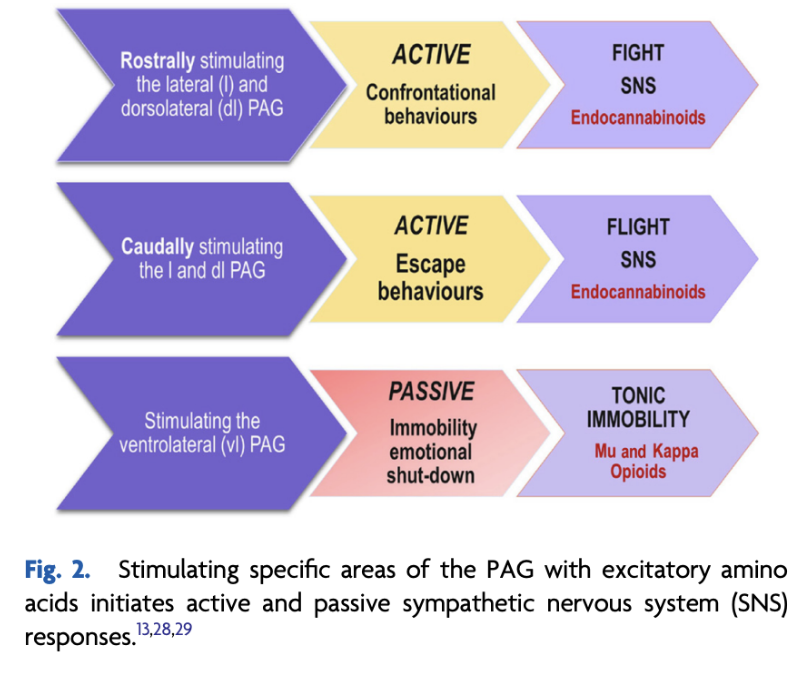
Figure 2 from Stirling et al. 2025
- The PAG (periaqueductal gray), salience network, and locus coeruleus shape a body that stays “on guard.”
- Tonic immobility (rape paralysis) can hijack the nervous system—long after the threat is gone.
- Trauma-informed care isn’t just about creating psychological safety—it’s physiologically essential.

⚠️ Trauma changes how the nervous system responds to touch, positioning, and clinical procedures—often reflexively and below the level of conscious awareness.
🏥 Trauma responses can be hard to predict - triggers are so personal. Watch for signs like zoning out mid-session (dissociation), going stiff or silent (shutdown), or becoming tearful or panicked (overwhelm). These are cues that we need to slow down and re-establish safety.
✨ But here’s the magic: by cultivating safety, choice, and co-regulation in rehabilitation practice, we can help clients have new experiences of safety in their bodies which might be a very important part of their healing process.
For example, inviting a client with a trauma history to choose between two movements, guiding the pace of the session with your voice and breath, and checking in with them as they move can create a sense of shared safety and control.
It’s not just about treating symptoms.
It’s about helping people shift from threat to safety, one interoceptive moment at a time.

This article reminds us: The body remembers.
And healing means giving it a chance to safely rewrite the story.
Let’s get curious:
- Have you had clients freeze, dissociate, or “numb out” during treatment?
- How do you titrate exposure to touch, pressure, or even breath?
- Is this something that you are thinking about?

Clinical Tips (for ALL Practitioners)
Whether you’re working in pelvic health, pain, neuro, ortho, or mental health rehab—trauma can show up anywhere, and often does.
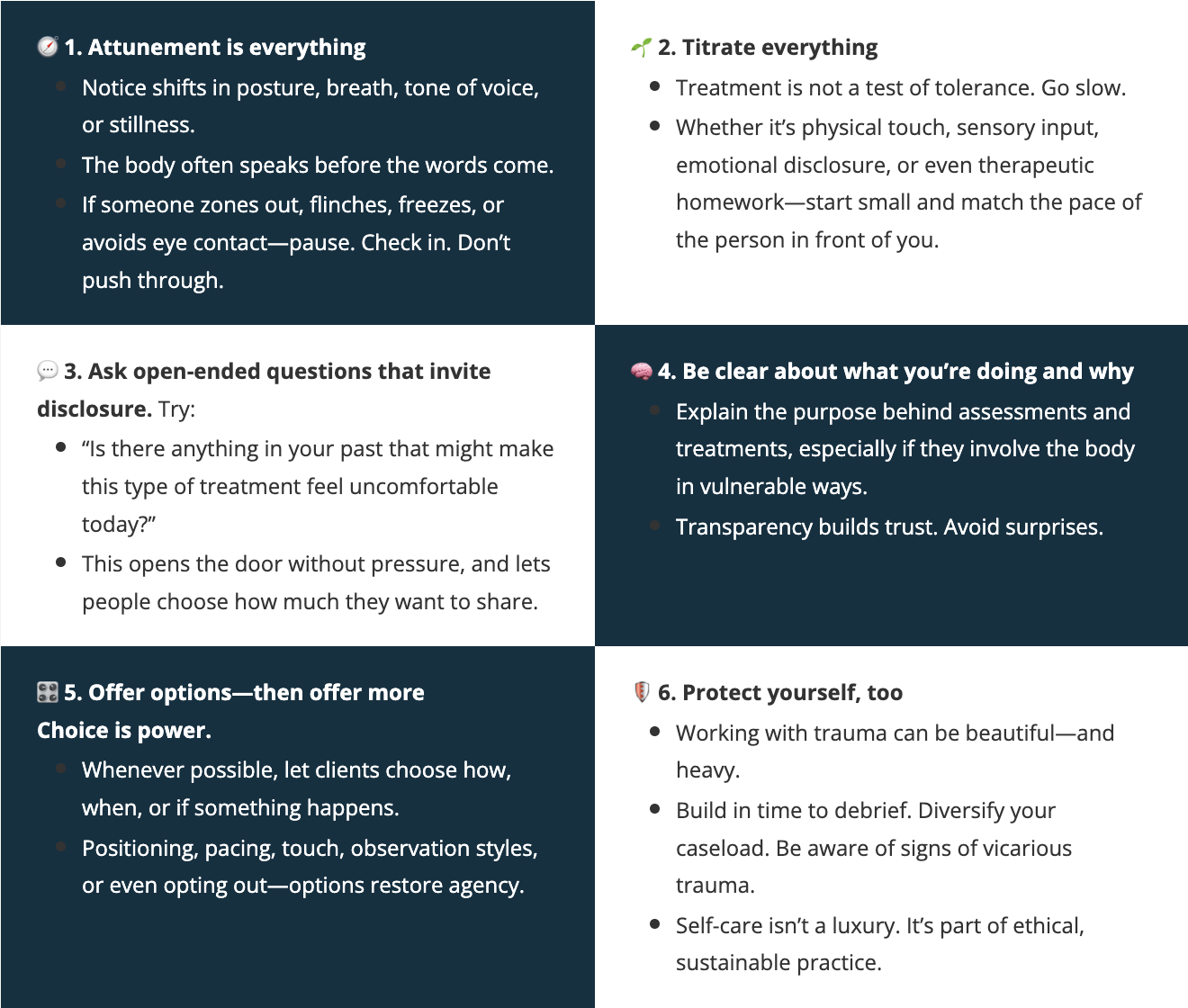
Here’s what this paper reminds us about how we show up in the room:
Book: 📘 The Body Keeps the Score – Bessel van der Kolk, M.D.Van der Kolk reveals how trauma isn’t just remembered—it’s stored in the body, shaping posture, pain, movement, and regulation. It’s essential reading for any clinician aiming to treat the whole person, not just the part.
“If the memory of trauma is encoded in the viscera, in heartbreaking and gut-wrenching sensations, in panic or numbness… then therapy must involve the body.”

👉 Consent is never a checkbox.
It’s dynamic, iterative, and body-based.
When someone has lived through trauma, being able to act—move, speak, say “stop”—is the intervention.
Where can I provide more opportunity for choice and agency in the care that I provide?
💬 Want to read the article?
Here it is.
Stay curious,